
World Ocean Explorer Learning Stations
We recently had two brothers (ages 6 and 8) visit three times in a row because they were so engaged with the display. Their mother noted they were obsessed with playing, and it was difficult to get them to take turns or to leave.
~ Daniella Rodriguez, Education and Outreach, the Shaw Institute of Blue Hill, Maine USA
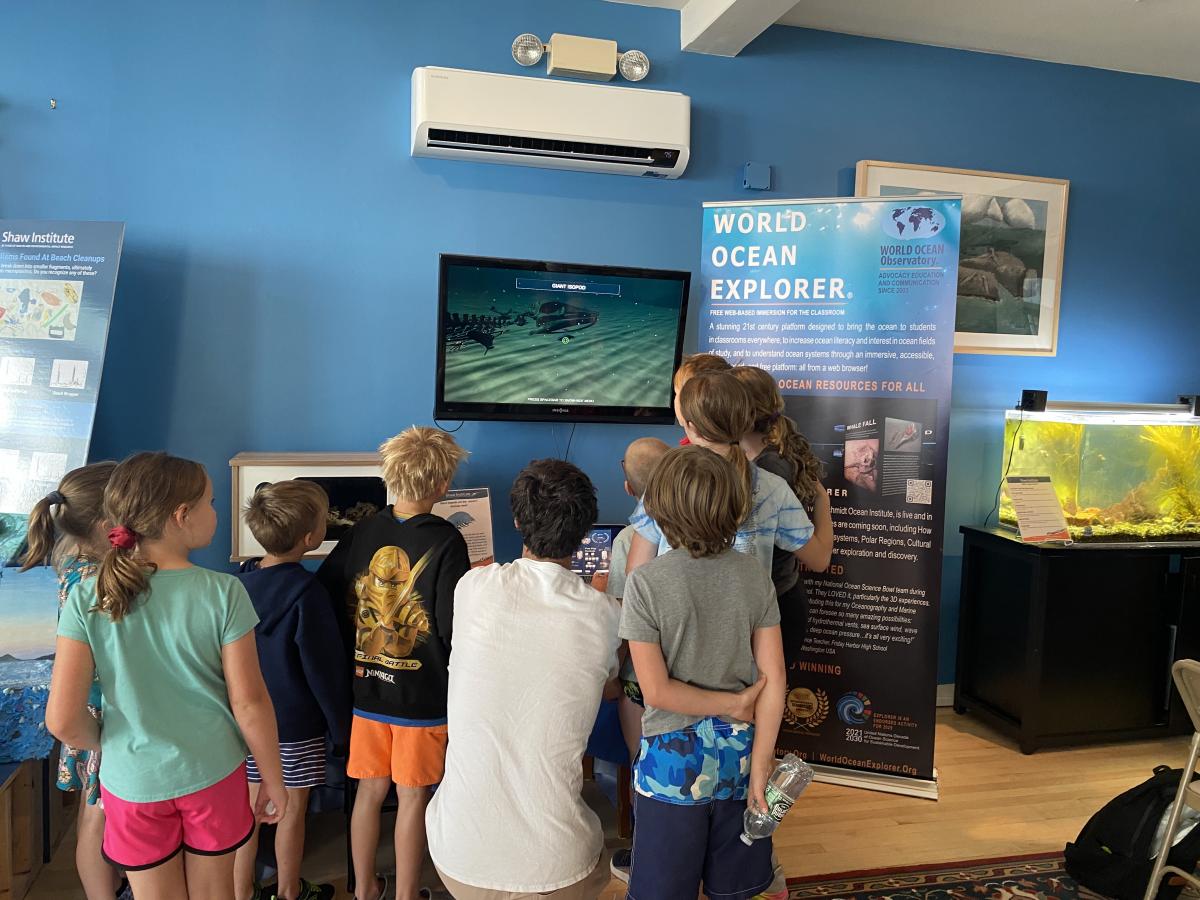
World Ocean Explorer's First Learning Station: visits inside the Deep Sea module located
at the Shaw Institute in Blue Hill, Maine. Deep Sea is a Schmidt Ocean Institute educational collaboration.
World Ocean Explorer and its Deep Sea module are now available as a stand-alone, interactive educational display ready for use in museums, aquariums, and other public-facing learning spaces. These experiences are free to install and use, supported through foundation and sponsor funding, include built-in translation features to expand global accessibility, designed to excite and educate students of all ages.
Learn More About World Ocean Explorer’s Free Public Learning Displays
W2O believes there is no better investment in the future of the sustainable ocean than through a new approach to educational engagement that excites, informs, and motivates students to explore the wonders of our marine world.

Whale Falls, Hydrothermal Vents, The Food Web: Immersive and Engaging
Deep Sea, developed in collaboration with Schmidt Ocean Institute and now available in four languages, is built using gaming technology to bring immersive experience to users everywhere. Displays include an immersive whale fall at 1,500 meters, an explorable hydrothermal vent, and drag-and-drop learning assessments for the 3D Deep Sea exhibit and explore a whale fall at 1,500 meters.
Free Ocean and Climate Resources Ready for Public Spaces. In Use Today!
Web-based or stand-alone displays are interactive. User employs keyboard
or controller. Deep Sea environments include a whale fall interactive:
exploration of life at 1,500 meters on the seafloor. View this one-page PDF for more info.
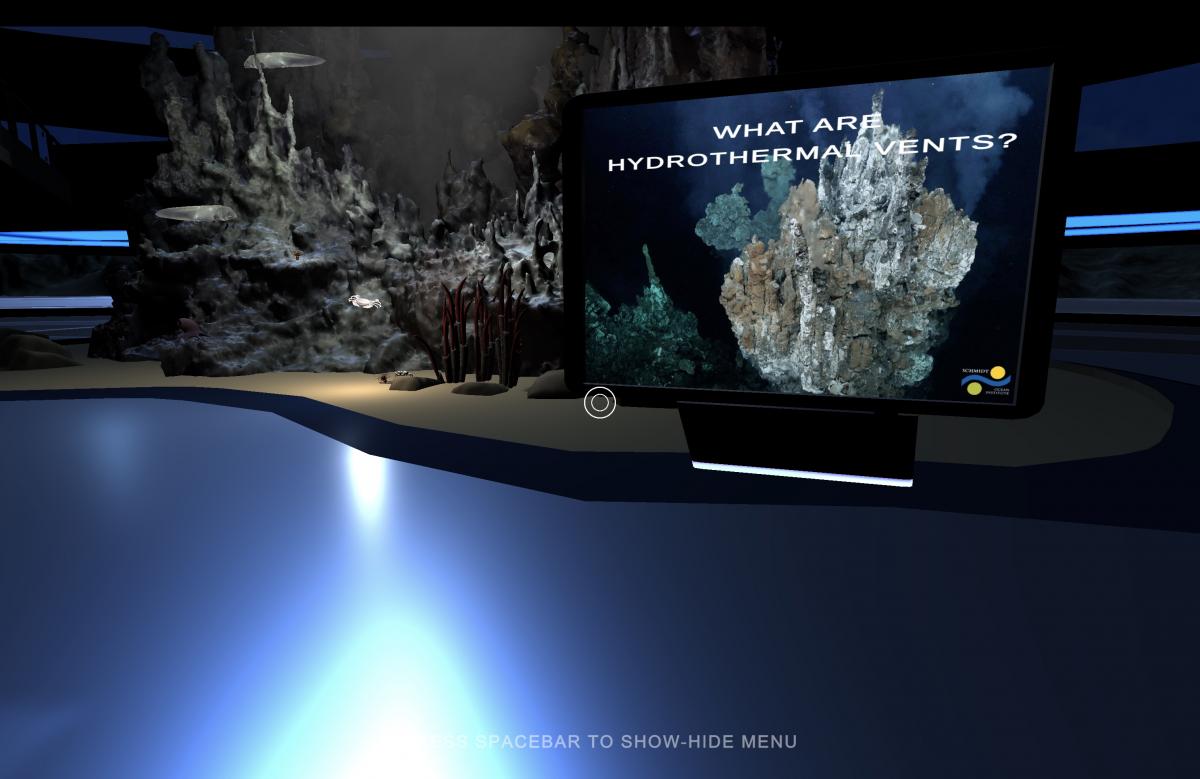
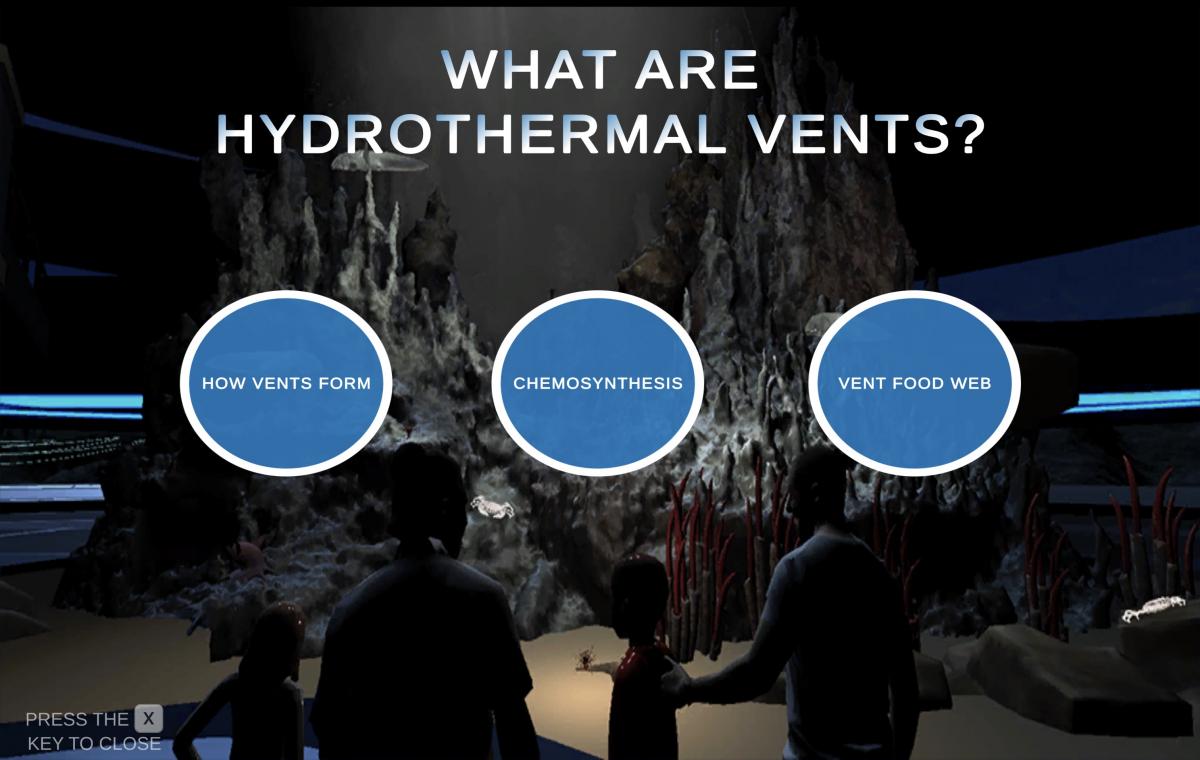
Drag-and-drop displays teach users about the food web of the deep-sea,
the fundamentals of hydrothermal vents, and how to understand chemosynthesis.
See more at worldoceanexplorer.org/deep-sea.html.
Materials sent (what we provide) in a flat pack mailing (donation of postage appreciated!)
- User instruction sheet
- Narration (how to use, how to monitor use, how to troubleshoot)
- Tutorial how-to set up display video
- Display files and user printouts (keyboard, about, qr code)
- Set up and institutional support
Requirements/Equipment List (what you provide)
- Modern laptop or tower
- Strong Internet connection
- Min 4g ram (ideally 8g)
- Mouse or track pad
- Headphones (not required, but more fully immersive)
- Bluetooth keyboard
- Dedicated power source
- Surge protector
- External monitor (50” best; 127 cm) the larger the better: more immersive!
- Adaptable for projector
- Track pad / Controller / Keyboard
- 4-6’ (122-182cm) table
Accessibility
- Stand-alone vs web-based
- Internet-required for web-based use
Interactive Environments
- Whale Fall
- Hydrothermal Vent Con: small space, limited content
- Food Web (learning assessment)
- Deep Sea Discoveries
Join Others Using Deep Sea in Public Spaces in 2026:
Shaw Institute, Blue Hill, Maine
Palmyra Cove Institute for Earth Observations, Palmyra New Jersey
and other environmental education organizations.
Contact us to learn more
d i r e c t o r @ t h e w 2 o . n e t
Downloadable White Paper: Learning Station Display Details HERE